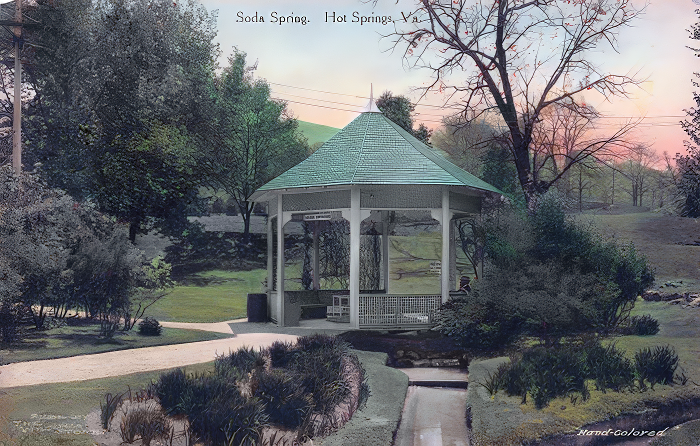
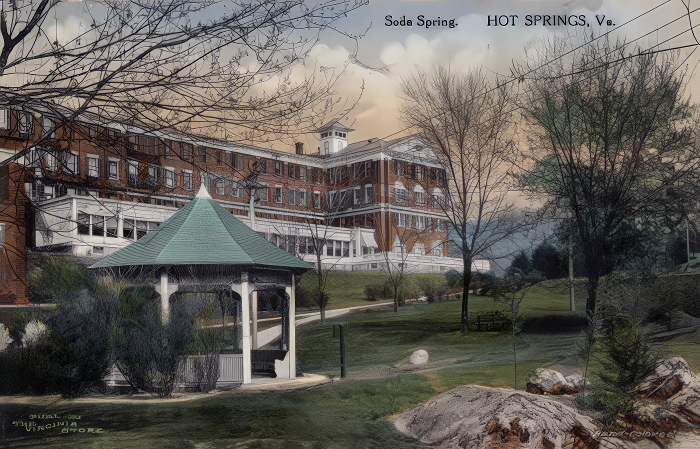
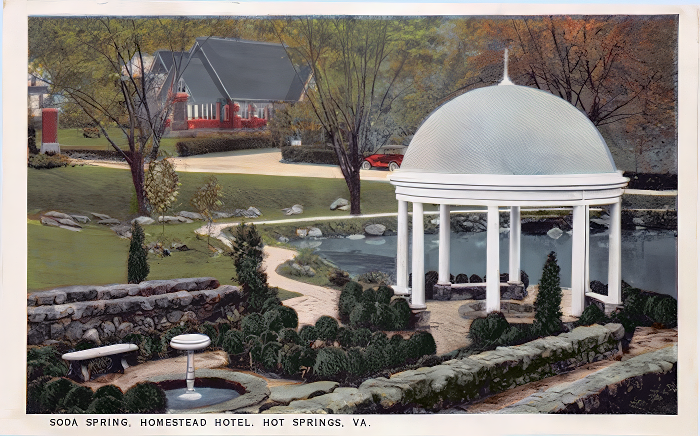
The Soda Spring was located near the hotel entrance on the main road. Sometime before 1900 a gazebo was constructed over the spring outlet, with benches arranged around the rail-encircled opening. Elsewhere on the grounds were the Magnesia Spring, sheltered by a similar gazebo and the Sulphur Spring, both renowned for their medicinal properties.
In 1922, the area was dramatically transformed when the gazebo was replaced by a Greek-style rotunda. Its design resembled domed structures built over a sulphur spring at the Greenbrier Hotel in West Virginia and a well at the South Pavilion of Monticello. The following year, the Olmsted Brothers of Massachusetts were commissioned to undertake an extensive landscaping project at the Homestead. Their plans identified the new rotunda simply as the "Temple."
Among their recommendations was the replacement of the "present lake" in front of the Temple with a reflecting pool in the form of a "distorted ellipse." For much of the twentieth century the Temple and its pond served as the Homestead's symbolic gateway and principal landmark, greeting arriving guests and travelers passing along the road.
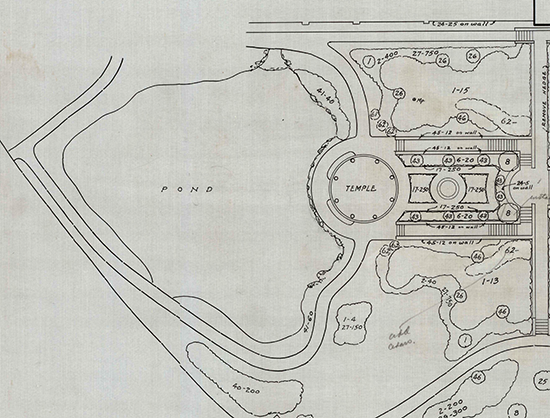

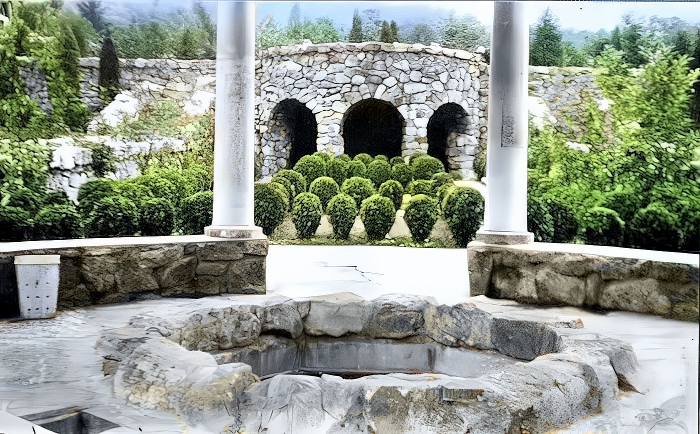
Inside the Temple, a shallow circular well contained the spring. Clear water revealed a bed of mineral formations. Behind the spring two stairways led up to a stone terrace and to the Formal Gardens. A dark grotto behind held mineral formations and stalagmites.
Boxwoods are slow-growing plants that can live for 50 to 100 years when properly maintained. Yet photographs from the 1940s reveal that the original boxwoods had disappeared, replaced by a simpler landscaping scheme. By this time, the pond also appears to have been reduced in size which had been proposed by the Olmsted Brothers in 1923.

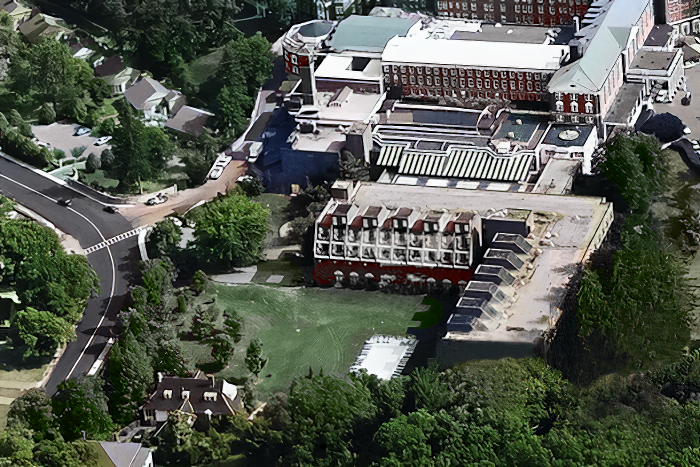
By the 1960s, the surrounding vegetation had matured, giving the area a more lush and secluded character. Another major change occurred in 1973, when the Homestead began construction of a modern convention center on the site of the Formal Gardens behind the Temple.
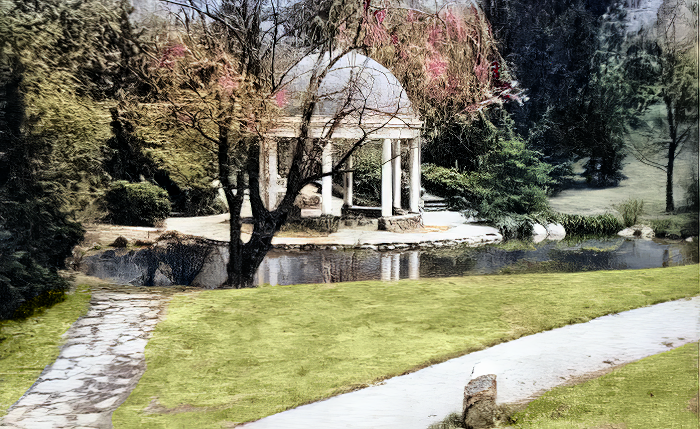
Although construction came within yards of the Temple and Soda Spring, both escaped demolition. The Formal Gardens were less fortunate. The site was cleared and the stone stairways and grotto were removed. Contemporary accounts suggest that stalagmites from the grotto survived and remained visible into the mid-1980s. Eventually the Temple was removed and the pond was filled in. Around 2000, an addition to the street-end of the convention center was constructed directly over the site of the Soda Spring, permanently erasing one of the Homestead's most distinctive landmarks.
The Soda Spring was an original fixture of the Homestead. And given the resort's long reputation as a mineral-spring resort in a town called Hot Springs, it's a surprising that the Temple wasn't moved to another location on the Homestead's property.