DVDs with digital audio soundtracks didn't arrive in the US until the Summer of 1997. Until that time all surround sound receivers used analog Dolby Prologic to extract and create rear channel effects from stereo sources like video tape and television. Receivers of the era might supply robust power to the front speakers, but the rear channels were limited to 25 watts max. Even the Yamaha RX-V0170 which was the flagship surround receiver of the era at $1300 msrp only supplied 30 watts per rear channel.
As a result the surround sound speakers sold by companies tended to be small and of poor quality with low 87-89db/watt sensitivity. Typically they were just small bookshelf speakers that companies craftily renamed to take advantage of the surround sound bandwagon. So when Dolby Digital appeared on DVD with six dynamic full-range channels it made the fragile, lightweight, surround speakers on the market obsolete overnight.
- Klipsch came to the rescue and in 1999 released the RS3 which used two 1" Tractrix horn tweeters and a single 6.5" woofer. Response was listed as 49-20khz with a sensitivity of 95db/1 watt.
- In 2001 Klipsch upgraded the speaker to the RS3 II which is said to have been one of the best selling surrounds in the US. The sensitivity (95db), woofer and tweeter sizes were the same as the RS3 but the response was narrower at 60-20khz.
- In 2003 the RS35 appeared. Advertised features were "Very high sensitivity and power handling" and "180° dispersion". Peak power had increased to 500w and response was a tighter 81-20khz with 97db efficiency.
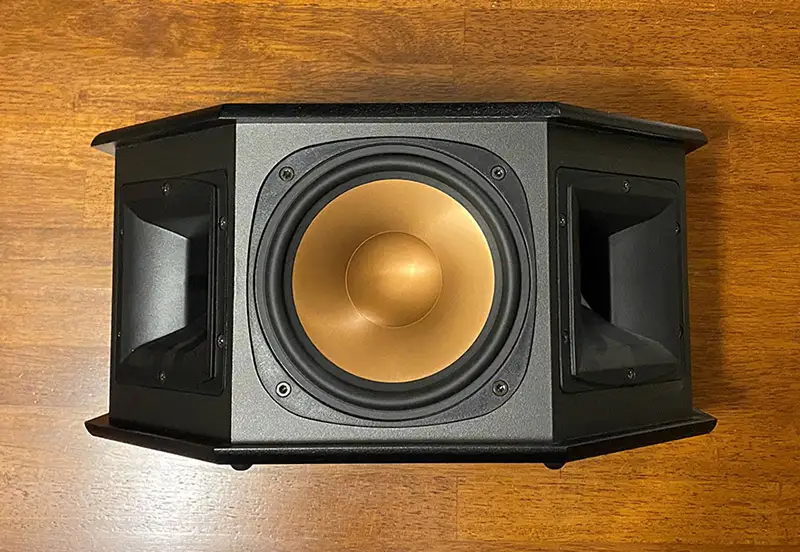
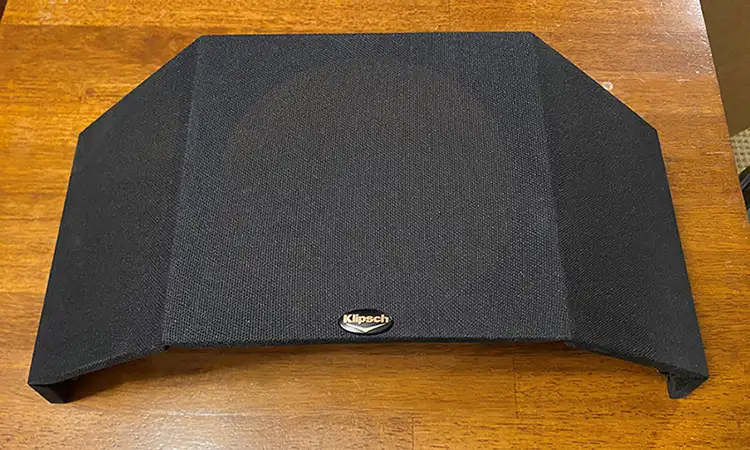
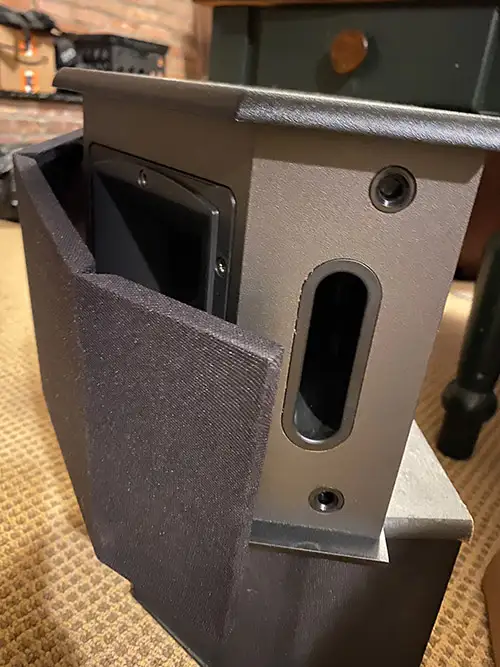
TWEETERS
Over the years Klipsch has used both Titanium and Aluminum " dome tweeters in their Reference series speakers. It has been said that Klipsch also used the same tweeter voice-coil across several models. This makes sense. Tweeters only receive a few watts at very high volumes and don't carry as much information as the midrange and woofer. The result is within a speaker series there isn't a valid reason for a company to create different voice coils unless truly necessary. This would explain why there are several similar Klipsch 1" tweeters from this period with slightly different part numbers. It appears Klipsch simply changed the tweeter faceplate depending on the mounting flange needed for a particular horn. Luckily, Klipsch added a feature which identifies the tweeters used on high performance models: a heat sink.
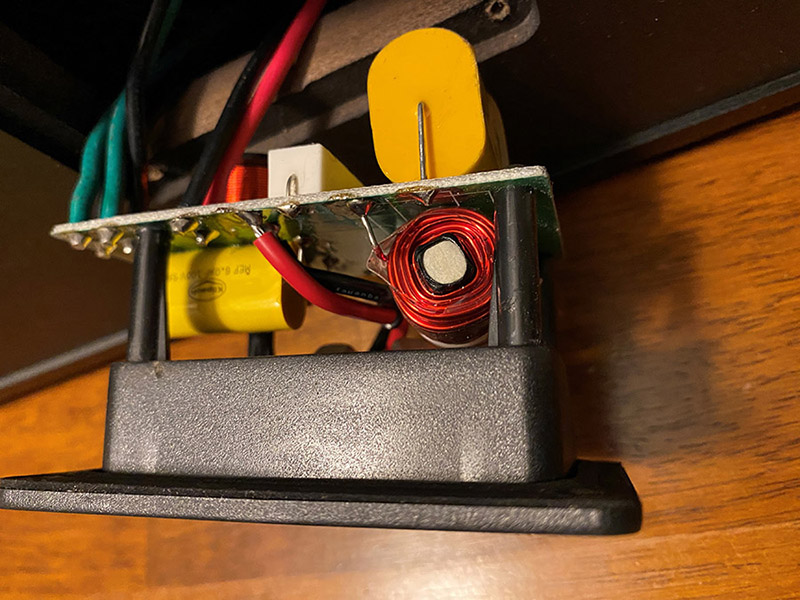
Each RS35 uses two K-137 1" Titanium dome horn-loaded tweeters and I recently noticed that one tweeter had lower output than the others, I must have clipped it over the years.Electrically all four tweeters measured 5.6 ohms DC but something was wrong on the bad one. Yet Klipsch didn't intend this tweeter to be opened for inspection: the voice-coil was epoxied in at the factory. I saw no way to take it apart without ruining it.
Replacement K-137 tweeters were scarce even back in 2006 and have long been unavailable. However, I saw a Klipsch tweeter I thought could work as a replacement: the 1" Titanium #1011956 said to be used in the RS-52/42 II surround and RC500 center. These speakers are rated up to 500 w peak with 96db efficiency giving this tweeter good provenance.
My working K-137 measured 5.6 ohms DC, the #1011956 at 5.4 ohms DC. The magnet on the #1011956 is a slightly larger diameter as well. I reused the horn gasket and it bolted identically into the RS35 horn. Playing a variety of full-range recordings I was unable to detect any difference between original and new tweeter in volume, voicing or timbre. With the tweeter restored my room feels more balanced and the soundfield is more coherent and accurate.

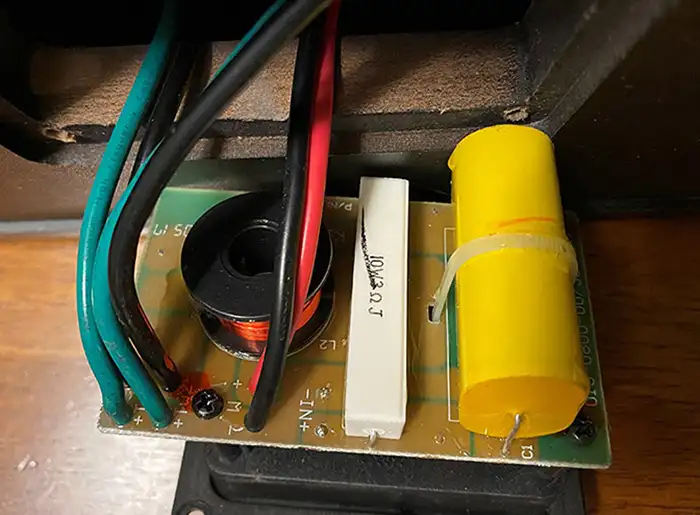
- High efficiency with low distortion
- Wide dynamic range
- Controlled directivity
- Flat frequency response
Ten years ago Klipsch sold the matched "RF62" speaker package. Every speaker (Front, Center, Rears) was rated at 97db@1W. But several years ago highly efficient surrounds were mysteriously dropped from their speaker lineup. Of the remaining three the RP-502SII is only 94db while the RP-500SA and R-40SA sensitivity is not even rated. Klipsch still sells bundled 5.1 speaker packages but the surround speakers included have de-evolved back to small, inefficient bookshelf speakers(!?) Why does Klipsch continue to sell highly sensitive front and centers (97db+) but chose to only downgrade their surrounds. Why the mismatch? I suspect the intent is to focus on Atmos for surround and smart TVs with soundbars. The key question is who is actually driving the direction of modern home theater. Is it the hardware companies who produce speakers and electronics, Dolby and DTS, the streaming industry, or something else?
/p>?Klipsch holds the patents to their own designs and is losing an opportunity here. If they reissued a surround speaker with an output of 97db/1W for the countless 5.1/7.1 systems still out there it would redominate the market. This would also create a product for the Heritage speaker owners who seem completely forgotten when it comes to matched home theater speakers. Perhaps they are worried that once people get a taste of efficient surrounds they won't want to buy lesser models. A race to the bottom is always wrong.